Related Articles
 |




'Cages' Playwright Leonard Manzella Talks Prison Reform, Humanity & Conversations With Inmates

Leonard Manzella's prison drama, Cages is currently playing at Stella Adler Theatre. The action of the play is centered on group therapy sessions in an administrative segregation unit in an unnamed California correctional facility. Inmates are contained in therapeutic modules that look like little phone-booth sized cages during the sessions. The play, which is largely based on Manzella's real life experiences as a prison social worker, weaves a heartening but often disturbing narrative between the inmates, clinicians, administrators, and correctional officers.
While sitting in a bright and simple deli on Hollywood Boulevard watching various costumed characters from Grauman's Chinese Theatre wander by, LAist chatted with Manzella about his new play and his ideas about prison reform.
What lead you to prison social work?
I got into the correctional business by accident because one of my specialties as a psychotherapist is psychodrama. I got a call from the chief probation officer in San Luis Obispo County who wanted to give cadets the experience of what it is like to be an incarcerated. So I created a psychodramatic role reversal training where I put the cadets through what incarcerated kids go through on a daily basis in juvenile hall. Two weeks after the training, I interviewed the cadets and I just could not believe how much they had learned! I modeled the training after Zimbardo's Stanford Experiment, but I monitored everything very carefully to make sure that no one got hurt and had a film crew document the entire thing. The film became an hour-long docu-training called the AVERT Project - Avert Violence Empathic Response Training -- that San Diego Country, Del Nor County, and many counties around the state used to train their officers. Later, I took a job doing group therapy with inmates in an administrative segregation unit, which is where the play is set. I remember going in there for the first time and seeing seven men in little cages.
Why did you write Cages?
I wrote Cages because from the very first day that I walked into that administrative segregation unit, I was in shock. I was scared. My jaw dropped. I though is this the United States? I wasn't naïve and I've seen a lot of things, but it was just so blatant and right in front of me. Men in little cages! I began to wonder, well, could corrections really be as bad as I thought and I discovered that it was worse than I thought. I'm not saying that as an indictment about prisons, but the system that we as a society have set up is really flawed. As I did groups and heard the inmate's stories there were days where I wanted to run away and never come back. And then there were days when those groups were everything I always wanted a church to be. It was an incredible experience, and I decided I didn't just want those stories to die on a cold cement floor. I wanted people to see through my eyes. I wanted them to see the way that we as a society are doing things. At first I hesitated -- I was afraid I wouldn't be able to do the story justice because those men really touched me very deeply. Basically, I want people to see through my eyes.
What was your creative process while writing Cages?
On my very first day in the administrative segregation unit, one of the inmates looked at me and said, "I like to chew human flesh. I like to drink warm blood." That actually happened to me on my very first day! I looked at the guy and I didn't know what he meant. Was he telling the truth? Then I realized that the inmates were testing me and that if I lost it there, that I couldn't come back. So I took a chance and said, "I think that is one of the craziest fucking things I've ever heard." Then everyone in the group started to laugh and I realized they had been putting me on. That was an actual story that happened to me, word for word. So I wrote down incredible experiences like that one. When I was ready to write the play, I picked them up and changed them around to protect everyone so people would never know the who and what. It was a very difficult for me to write a play because I had all of these vignettes, but yet, I didn't have a story. I had to weave a credible story with a purpose. It took me a long time. And I wanted to be very careful not to be overly heavy handed against the prison system because that is not what Cages is about. It is really about the humanity of the people in there, regardless of whether they need to be in there or not.
How involved were you with production of your play?
Very involved. I met with director John Lawrence Rivera and immediately liked his ideas. He told me that writers often come to him and have such a fixed idea in their minds about what they want, which leaves nothing for the director to do. But John has a very good reputation for theatricality, and I wanted him to do that. I did have one concern about actors -- there is a kind of acting that really bothers me. I wanted actors that really don't seem like actors. I was artistically involved and from the very beginning. I was at every rehearsal and every casting session because I really wanted to make sure that the stories of the men in the administrative segregation unit were going to be as faithful to the men as possible. John was very receptive to that. We had several moments of some tension, but I think overall it went very well.
What messages do you want to convey to audiences through Cages?I want the audience to see the humanity of the stories. I've been a clinician for many, many years, and these narratives are not unlike the stories that I have heard from women, men, and children who have been abused and tortured by parents and significant others. It's a mirror. We as a society have a very hard time looking at our own shadow and the prison system is our shadow. We don't want to look at that because it contains a lot of the stuff that our society just won't confront. I want people to see that these prisons are institutions that we have created. They are who we are. The way we treat prisoners, the way that we take care of those that have slipped through the cracks -- that says something about us. So I want people to ask questions. There is a fundamental theme in the play and that is that we all live in metaphorical cages until we actively decide that we don't want to live in a cage anymore. I created a story of a man living in a mental cage that becomes liberated through his work with the inmates. |
The cages themselves are officially called therapeutic modules, but for me they were cages. It was my gut reaction. It came to me because I thought of the cages that we all live in in our own lives. In that part of my life, I lived in a partial cage that I did not want to let myself out of, and I think a lot of us when we are unwilling to express ourselves in the world to interact to love to play to just be free with ourselves and with our spirit, I think of that as living in a cage. I was thinking of the actual cages, but it is also metaphoric about something bigger.
Do you personally identify with any of the characters in Cages?
I identify with all of them. Every single one of them. Like I identified with every character I have ever played. We are all more alike than we are different. Human beings. So I identify with their stories.
How has the fact that you are a social worker impacted your play?
The fact that I am a social worker really enabled me to go in to the prison system and observe. That is all it did. But being a social worker doesn't really make the play any different. What is does is give Cages an authenticity -- I know terminology, how the system works, gave it realism. But I had these same feelings and curiosities before I even became a social worker. I think that anyone with a compassionate heart like a corrections officer or an inmate could write it the same way if they had those feelings.
Has working with inmates changed your view of the corrections systems?
Oh, absolutely. I realized while working with inmates that you should never give up on any human being. You never know who can change and who can't. There have been people that I thought would change but don't. Then someone I would have given up on, well, they make changes! You really don't know who can do that and I don't think that we can really give up on anybody. Also, I know that there are some people that just can't be let out. They are just too wounded and too hurt and too dangerous to walk with the rest of us. One of the points, too, of this play is that the way we treat prisoners really says something about us. It is really about us as a society. People that don't want to take responsibility for our correctional institutions are putting their heads in the sand because it is about them too. The public was so outraged when they saw what was happening in Abu Ghraib, but they have no idea what is going on in the correctional facilities in their own neighborhoods and I think they need to start looking at that. And again, this isn't a touchy-feely thing, oh the poor inmates, not at all. It is about asking what kind of a society do we want to be?
In your opinion, what should be done to make prisons better?
First of all, we as a society should define what we are really trying to do. A correctional institution should be in the business of going out of business. But we have created a prison industry. If you look at how many people live off of that industry, it is riddled with conflicts of interest. Until we come to terms with that, we are in trouble. We need inmates in prisons because we have created an industry that we need to feed. And now we have private prisons! People trying to spend less make more profit, what do they need to keep and industry going? They need inmates. It is a conflict of interest. So how do we get into the business of going out of corrections business? Well, we could be very creative. We have to be honest when we call it the California Department of Corrections and Rehabilitation -- either cut the "R" off on the end or really rehabilitate. Let's not talk out of the sides of our mouth. In California, 50 to 60% of incarcerated men are in prison for non-violent crimes. In the United States, we have approximately two million people incarcerated. That is two million incarcerated. Take that, and multiply it by how many kids, wives, parents, and communities of those millions of people are affected. We need to try to get the inmates that can come back to society and start taking care of their families and contribute to society. How do you get that? You teach them. We should be disciplining them. Discipline comes from the word disciple which means to teach. I can tell a prisoner walking down the street because they still walk like they are a prisoner. I think a year before they get out they should start dressing in normal things, start preparing them to balance a check book, teach them to interview for jobs. Everybody says why should we do that for inmates? Why should we give them special treatment? The answer is that we shouldn't -- we should do that for everybody. It is a moral question. We as a society need to take responsibility for our citizens because we as a society have created ghettos. Why do we let ghettos exist? Why do we let horrible neighborhoods exist? Why aren't we doing more? The play is about trying to expose that a bit, my view, just to bring the discussion forward a little bit. There are many things we need to chance and with all of the creative wonderful minds we have, we could come up with some incredible models if we wanted to.
What is next for Leonard Manzella the playwright?
I am writing a new piece about a young man. His mother abandoned him at a very early age, and when he is old enough and his father passes away, he goes searching for his mom. It is kind of a road story, and on his search he discovers himself and life and he... well I won't tell you the ending. It is really dear to my heart, this one. It is just an organic piece that is just coming out of me about this young man searching for himself, for his soul, for his mother and finally finding it and how it impacts him. So that is what I am working on now. And also I don't think Cages is going to end. We are looking at another production. So I think I'll be busy with this and writing the new piece.
Is there anything else you would like to say to LAist's readers?
Come see the play!
Cages is playing at Stella Adler Theatre through April 1. Tickets are $20 to $25 and available online or via phone at 800-838-3006.
Contact the author of this article or email tips@laist.com with further questions, comments or tips.
______________________________________________________________________________________

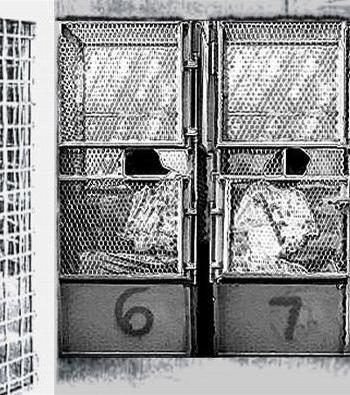
December 28, 2010/By Jack Dolan, Los Angeles Times Prisoners with psychiatric problems must be treated, and the therapists must be protected, but many question the state's approach. Before group therapy begins for mentally ill maximum-security inmates at California prisons, five patients are led in handcuffs to individual metal cages about the size of a phone booth. Steel mesh and a plastic spit shield separate the patients from the therapist, who sits in front of the enclosures wearing a shank-proof vest. | |

During a recent session at a prison in Vacaville, psychologist Daniel Tennenbaum, wearing a herringbone sports coat over his body armor, sat just out of urination range of the cages with an acoustic guitar, trying to engage the inmates with a sing-along of "Sitting on the Dock of the Bay." About a decade ago, a federal judge ruled that it was cruel and unusual punishment to leave mentally ill prisoners in their cells without treatment. Since then, state prisons have spent more than a billion dollars delivering care to an ever-growing population of inmates diagnosed with schizophrenia, bipolar disorder and other psychiatric problems. State officials say they have not tried to estimate how much of that cost is attributable to the caged therapy. The value of the sessions, however, is the subject of heated debate among mental health professionals today. "Those cages are an abomination. They train people that they're not human, that they're animals," said Terry Kupers, a psychiatrist in Berkeley who served as an expert witness on treatment of mentally ill prisoners in the case that forced California prisons to provide psychiatric care. "It's bizarre, it has a Hannibal Lecter quality to it," said H. Steven Moffic, likening California's procedures to the measures used to contain an incarcerated serial killer in "The Silence of the Lambs." Moffic, a psychiatry professor at the Medical College of Wisconsin, has written about treating patients in prisons under less imposing restraints. "I'm not quite sure what the clinicians think they are going to get out of it," he said of California's method. Prison officials say they're doing their best to comply with the court order, which requires them to offer treatment to all mentally ill inmates, no matter how dangerous. Overall, that care in 2006 cost the state $166 million to treat about 32,000 inmates, department records show. By 2009 the number of inmates had risen modestly to 36,000 but the cost of treatment had more than doubled more than $358 million. About 3,500 of those prisoners stepped into a cage for group therapy after being sent to a segregation unit for offenses committed inside prison walls, including receiving smuggled drugs, organizing gangs or assaulting prison employees. Jeffrey Metzner, a Colorado psychiatrist who has advised the court-appointed special master overseeing mental healthcare in California prisons, said the enclosures offer better security and more freedom of movement than alternatives used in most states, which include handcuffing patients to their chairs or shackling an ankle to the floor. Once the inmates are inside the cage, their handcuffs are removed. Metzner also advised prison officials to refer to the enclosures as therapeutic modules, not cages. "The name is important, because if you call them cages, people inside might feel like animals and respond accordingly," he said. That's precisely why some critics object so strongly to the enclosures. "You're not fooling anybody with some ridiculous euphemism," said Pablo Stewart, a San Francisco psychiatrist and outspoken critic of the enclosures. "This is one of the more horrendous examples of what goes on in the California Department of Corrections." Among Stewart's concerns is the fact that some mentally ill inmates remain in disciplinary segregation units, receiving therapy in cages, until their parole dates arrive. "So one day you're so dangerous that you have to be in a cage and the person talking to you is sitting at a distance wearing a flak jacket, the next day you're sitting on a bus," said Stewart. "That's scary." A few mentally ill inmates are involuntarily committed to hospitals after release from prison, officials said, but most get a supply of medication and instructions to continue therapy when they're back on the street. At institutions where space is tight, the therapy modules have been arranged in the middle of inmate living quarters with multistory cell blocks towering overhead; their bored occupants are looking down, taunting. "You go down for therapy and there are guys screaming and yelling at you from every floor," said Jane Kahn, an attorney who represents inmates in the ongoing litigation. Aside from making the sessions difficult, exposure to other inmates obliterates the sense of confidentiality essential for worthwhile therapy, Kahn said. Prison officials recognize the problem but say they don't have much choice. "That's a function of not having the space for clinicians to do their jobs," said Terri McDonald, chief deputy secretary of the California prisons. "If you were to ask us if that's the preferred way to do business, the answer is no." Last month, the U.S. Supreme Court heard arguments on whether tens of thousands of inmates should be released so the prisons would have enough room and an adequate staff to deliver medical and mental healthcare that meets constitutional standards. Although some California prison psychologists insist the individual therapy enclosures are ultimately a good thing, even they can be taken aback the first time they see them. "To come in here and realize that was how they do group therapy, it was super-hard to get used to," said Angela Gross, a prison psychologist who started working with the modules in 2006. Tennenbaum, the music therapist, says the work is useful despite the circumstances. "We talk, we write songs, we do stuff like that all week. It's really helpful," he said. Despite the votes of confidence from prison staff, there are indications that the state might be moving away from the enclosures. Sharon Aungst, California prisons' chief deputy secretary for healthcare, noted that other states have found less restrictive ways to handle security in group therapy sessions. Prisons in New York, she said, have begun using chairs with desks that come down over inmates' legs, locking them in but leaving them free to move their arms and giving them a writing surface. "We are looking at another option to these therapeutic modules," Aungst said. "They're not my favorite either." Copyright 2011 Los Angeles Times |

Prison doctors, barred from seeing patients, collect full pay
Salaries for at least 30 suspended health workers have cost California more than $8 million since 2006, state records show. Psychiatrist who has not treated an inmate since February 2006 has performed duties such as sorting mail at California State Prison, Solano, in Vacaville.
November 28, 2011/By Jack Dolan, Los Angeles Times
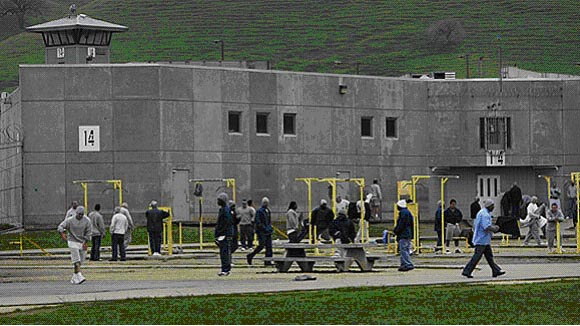
California prisons have paid doctors and mental health professionals accused of malpractice an estimated $8.7 million since 2006 to do no work at all or to perform menial chores like sorting mail, tossing out old medical supplies and reviewing inmate charts for clerical errors.
At least 30 medical professionals have collected their six-figure salaries for a cumulative 37 years in a kind of employment limbo after fellow doctors decided they were too dangerous to treat inmates but before the state's lengthy discipline appeals process made a final decision on whether they should be fired, state records show.
Californians would rather ease penalties than pay more for prisons Poll shows a change in attitudes as California seeks ways to comply with court-ordered cuts to its prison population. Soured economy is a key factor.
Copyright 2011 Los Angeles Times

Californians would rather ease penalties than pay more for prisons
Poll shows a change in attitudes as California seeks ways to comply with court-ordered cuts to its prison population. Soured economy is a key factor.
July 21, 2011/By Jack Dolan, Los Angeles Times

Reporting from Sacramento
Cash-strapped Californians would rather ease "third-strike" penalties for some criminals and accept felons as neighbors than dig deeper into their pockets to relieve prison overcrowding, a new poll shows
Copyright 2011 Los Angeles Times

California pays $2.25 million to family of brain-damaged inmate
A lawsuit alleged a Ventura Youth Correctional Facility guard violated the prison's suicide prevention policy by allowing the 16-year-old girl to cover her cell door window. She was found hanging. By Jack Dolan, Los
Angeles Times/November 11, 2011
California prisons have paid $2.25 million to the family of an inmate left severely brain-damaged after she tried to hang herself in the mental health unit of the Ventura Youth Correctional Facility in Camarillo.
The family's lawsuit alleged that a guard violated the prison's suicide prevention policy by allowing then-16-year-old Shanelle Crawford to cover the window in the door of her cell in May 2008, making it impossible for staff to see inside.
In a 2009 deposition, the male guard said he occasionally let girls cover their windows for "a minute or two" while they used the toilet or undressed for the shower.
The extent of Crawford's brain trauma suggested that she could have been hanging for eight to 10 minutes before guards forced their way into the cell and freed her from the noose she'd fashioned from a bedsheet, according to a neurologist hired by the family's lawyer, Ronald Kaye.
Robert Crawford, the girl's father, said he learned of the suicide attempt when an inmate advocacy group tracked him down in Texas a few days later. He didn't grasp how desperate his daughter's plight was until he reached the hospital in California and the doctor gave him a stark choice: "I could pull the plug or she would live as a vegetable for the rest of her life," Crawford said.
Like many of the wards in Shanelle Crawford's wing of the Ventura facility, she was profoundly troubled. She suffered from major depression, had been a victim of sexual abuse and had made a serious suicide attempt two years earlier, court records show.
"This was probably the most suicide-prone population on Earth," Kaye said.
The policy prohibiting covered windows had been instituted after the successful suicide of an 18-year-old at a Stockton youth prison in 2005. Nearly 40 minutes elapsed between the time guards noticed his window was covered and the time they opened the door to find him hanging.
Now if guards see a window covered they are required to intervene immediately by getting the inmate to take down the obstruction, or by going into the cell if the inmate refuses to cooperate or doesn't respond.
Prison spokesman Bill Sessa said he didn't know whether the guard had been disciplined after Crawford's suicide attempt. But even if he was, "that would be a personnel action and most of those are considered confidential," Sessa said.
Administrators are "looking to see if the policy needs to be changed or clarified in any way," Sessa said.
Corrections officers have repeatedly failed to follow the policy since its implementation. A 2006 inspection of a youth facility in Chino found 11 cells with covered windows and a follow-up inspection found 22, including one cell with "a knotted-towel rope suspended from the light fixture," according to a 2007 prison inspector general's report.
Just before her suicide attempt, Crawford had argued with a corrections officer who told her to get off the phone with a family member because it was time for her shower. Eventually, the officer "physically hung up the phone, greatly upsetting Shanelle," court records show.
Now 20, Crawford lives with her father in Austin, Texas. She remains bed-ridden, can't use her hands and struggles to respond to spoken questions, said Codessa Davis, a family friend who helps care for her.
The money, minus $867,935 in attorney's fees, will go into a trust to help cover her medical costs, according to the settlement order.
Copyright © 2011, Los Angeles Times

Prisoners' hunger strike in its third week
The inmates are protesting lengthy stays in isolation cells. Prison officials say 49 inmates who have lost at least 10 pounds each are 'being monitored closely.'
July 19, 2011/By Jack Dolan, Los Angeles Times
Reporting from Sacramento — More than 400 inmates at four California prisons are in the third week of a hunger strike to protest long, punitive stays in isolation cells.
Prison officials, who refuse to allow reporters into the institutions to interview the strikers, said 49 inmates who have lost at least 10 pounds each are "being monitored closely," including seven at Pelican Bay, the maximum-security prison near the Oregon border where the hunger strike began.
An inmate at the state prison in Tehachapi in Central California has lost 29 pounds, according to Nancy Kincaid, spokeswoman for the court-appointed receiver in charge of prison healthcare.
Inmate advocates say thousands of inmates have joined the strike, which began July 1. Many are beginning to show dramatic weight loss and collapse with the early signs of starvation, they say.
Dozens have been sent to prison infirmaries because of irregular heartbeats and fainting, according to a statement issued Monday by a group calling itself California Prison Hunger Strike Solidarity, which represents attorneys and family members of inmates. "Most have lost 20-35 pounds," the statement said.
Major medical problems begin once a hunger striker has lost 18% of his or her body weight, according to an article from the Journal of the American Medical Assn. that prison officials said they were using as a reference for what to expect if the protest continues. Life-threatening problems typically begin when a person loses 30% of body weight.
How long it takes to reach those stages varies from person to person, according to the article.
So far, no inmate has symptoms requiring a trip to emergency clinics within prisons or specialized outside medical care, according to an email from Kincaid.
Despite repeated assurances that the situation is under control, the California Department of Corrections and Rehabilitation refused The Times' request to visit and interview striking inmates.
"At this time, we are not allowing media into the prison due to security and safety issues," prison spokesman Oscar Hidalgo said in an email. "This hunger strike signifies a disruption in normal operation of Pelican Bay and our operations staff are focused completely on resolving this issue."
Two inmates at Pelican Bay required intravenous fluids over the weekend, according to Kincaid.
During a protest by inmate supporters outside prison headquarters in Sacramento on Monday, Maria Moreno, mother of two inmates at Pelican Bay, said one of her sons had lost 20 pounds and the other had lost 13 pounds. Kincaid said both of Moreno's sons began eating again last week.
The inmates are protesting lengthy stays in Security Housing Units, known as prisons within the prison, where they are sent for violating rules. They are typically kept alone in their cells for 22 hours a day, allowed out for medical visits and for exercise in individual wire cages on the prison yard.
The only way to get released from the unit, inmates say, is to confess that they are prison gang members or offer guards incriminating information about others who are gang members. Doing that, they say, puts their lives at risk and can put their families in danger.
"There is another way for inmates to be removed from the SHU," Hidalgo said in his email. "They can maintain an inactive status from any gang involvement for six years."
Inmates and advocates want that policy abolished.
"It is absolutely unconscionable and inhumane for anyone to think that solitary confinement for six years is OK," said Linda Evans, an organizer for All of Us or None, a group that provides legal services to prisoners with children.
Copyright © 2011, Los Angeles Times

Prison guards en garde: new contract provision gives unlimited vacation accrual and major new problems for budgeters Prison Guard: a job with a reputation for being undesirable is getting some huge overhauls and not just a few new perks... In a new provision approved by Governor Jerry Brown, California correctional peace officers will be able to accrue uncapped vacation time. |
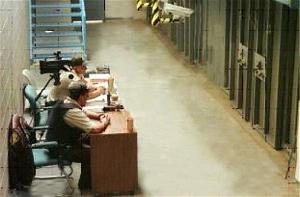
Correctional officers, along with most state workers, already can stockpile a notoriously high 80 days of vacation time, which can be collected as cash when they leave the job. The average correctional officer has an average vacation time of 19 weeks already accrued, which translates into an estimated $600 million in liability and a huge headache for an already financially beleaguered California. And you thought two weeks was generous!
Copyright © 2011, Los Angeles Times
Psychotherapy in a Cage
By Steven Moffic, MD/February 3, 2011
 |
|
So I’m gonna sit on the dock of the bay, Watching the tide roll away;
Ooo, I’m sittin’ on the dock of the bay, Wastin’ time. Looks like nothing’s gonna change, everything still remains the same.
I can’t do what ten people tell me to do, So I guess I’ll remain the same, yes...
This sort of treatment had been going on since 2006 and was defended by the music therapist. “We talk, we write songs, we do stuff like that all week. It’s really helpful.” Though the American Psychiatric Association knew of this practice, I could not elicit any informal or formal comment on psychiatry in this prison from this APA.
Now perhaps such a song was an attempt to convey empathy and build rapport. Perhaps the limited non-verbal information could be overcome, though non-verbally is usually how we detect lying, which is so common in inmates. Perhaps the catcalls of the surrounding prisoners in overhead cells could be like a modern Greek chorus.
Now, over the years, I encountered many other new limits on treatment, ranging from drastic reductions in hospital days to 15 minutes or less medication checks. Therefore, although I couldn’t conclude, as some other psychiatrists who were interviewed did, that psychotherapy was impossible in a cage (or, in a therapeutic module, as some have renamed it), perhaps there’s a larger and more general issue here. The more general issue for all clinicians may be: what is minimally acceptable psychiatric treatment of any sort-- the bottom line, so to speak? Our various practice guidelines are for recommended treatments. Our students are taught to try to provide optimal treatment. The AMA’s Principles of Medical Ethics recommends “competent” treatment.
Do we need to incorporate minimally acceptable treatment into our guidelines and quality assurance? If so, would this sort of group therapy in this environment be acceptable? Would 15 minutes med checks be minimally acceptable? How about 10 minutes? How infrequent must psychoanalytic psychotherapy be conducted to be minimally acceptable? How about CBT? Maybe a therapeutic “bottom line” can help us offset a monetary “bottom line”? Or, will it become more of a malpractice risk?
Guilty of Mental Illness
William Kanapaux, January 1, 2004
Root Causes
The report found that the high incarceration rate for people with mental illness is a direct result of underfunded and fragmented services. "Chronically underfunded, the existing mental health system today does not reach and provide mental health treatment to anywhere near the number of people who need it," it explained.
Public mental health care systems are stretched for money, according to Koyanagi. And they have people within their priority population who demand services and are responsive to less expensive treatments. "Those folks tend to get their needs met," she said.
People with serious mental illness who are left out of services are more difficult to reach and more difficult to treat because of the nature of their illnesses, she said. They may be dually diagnosed or already homeless.
Koyanagi noted that, from a cynical perspective, it can be said that criminalization is to the advantage of public mental health care systems. "The system can pretend they're not there."
When these individuals do leave the criminal justice system, they often can't get into local community mental health care programs, just as they can't get into public housing. "They're deemed unsuitable for that particular program because of their record," she said.
Over the last several decades, states have emptied their psychiatric hospitals without moving sufficient resources into community-based programs. Meanwhile, overall prison populations have soared.
It is tempting for people to conclude that a causal relationship exists between the decreased number of people in state psychiatric hospitals and the increased number of inmates with mental illness, Osher said, but the data do not support that belief.
Over the last 20 years, the U.S. prison population has experienced an enormous increase, with about 3% of the adult population now under some form of jail or correctional supervision, he said. Consequently, the problem has more to do with the way that people get arrested. People who are visibly homeless or have drug and alcohol problems are landing in jails and prisons with greater frequency.
The jails themselves represent a public health opportunity, according to Osher. Given estimates that about 15% to 17% of people coming into jails have a serious mental illness and that there are 11 million arrests a year, "that's a huge number of folks who are mostly not connected with systems of care." Screening programs could help identify those people so that they can get connected with appropriate treatment programs.
People who are privately insured are not immune from run-ins with the criminal justice system. A privately insured person with bipolar disorder can run into serious problems during a manic episode. In such cases, encounters with the legal system are usually less harmful, Koyanagi said. Often these individuals can be stabilized and returned to services within the community.
The people who tend to get stuck in the criminal justice system usually have long records, she told PT. "It doesn't just happen once, it happens again and again because nothing is done to deal with the underlying problems. And you end up in prison because you have a long rap sheet."
Koyanagi agreed that drug crimes are a major contributor to the growing number of mentally ill in jails and prisons. Whether a user or a seller, people with co-occurring mental illness and substance abuse get swept up by punitive drug penalties, she said.
Efforts to Respond
Koyanagi and Osher both served on the steering committee for the Criminal Justice/Mental Health Consensus Project Report, which was issued in 2002. The project represented an unprecedented national effort to bring together federal policy-makers with criminal justice and mental health care professionals to create a more responsive system for addressing the needs of people with mental illness who are at risk of involvement or are already involved with the criminal justice system.
Jail and prison overcrowding issues are high on the priority lists of wardens and sheriffs in this country, and correction officials are clamoring for improved mental health treatment in communities to deal with this, Osher said. Because of the high rates of people with serious mental illness in the criminal justice system and the problems they create in terms of service utilization and jail management, the mental health care field has partners in law enforcement and the courts and among corrections personnel.
"When you go before a state legislature and advocate for better mental health services as a psychiatrist, it seems self-serving," Osher said. "But when you go before them as a warden or a sheriff or a police officer, folks listen."
The first recommendation in the Human Rights Watch report, which drew upon the work of the Consensus Project, is for enactment of the Mentally Ill Offender Treatment and Crime Reduction Act, which was introduced in 2003 by Sen. Mike DeWine (R-Ohio). On Oct. 29, 2003, the U.S. Senate unanimously passed the bill, which would provide five-year grants to states and localities that could be used for mental health courts, in-jail treatment, transitional services and training. The bill now awaits action in the House, where it was introduced by Rep. Ted Strickland (D-Ohio).
The Bazelon Center is concerned that if the bill passes, the money will be spent to build up mental health services within jails and prisons without focusing on community-based services that would keep people out of the criminal justice system in the first place, Koyanagi said. Nothing in the bill prevents the money being used primarily or exclusively for services in jails and prisons, she said. The Bazelon Center feels that services in these facilities should be the responsibility of criminal justice agencies.
Mental health care systems need to develop evidence-based services such as assertive community treatment, which takes an intensive team approach to helping a person receive treatment and supports, and integrated substance abuse services, Koyanagi said. While funding services within the criminal justice system deals with the immediate problem of what to do with a prisoner who is psychotic, it is a temporary, not a systemic, solution.
"The ultimate goal of people in the criminal justice system is not to have so many of these folks in their facilities," Koyanagi said. "Building up mental health services inside of jails and prisons doesn't encourage judges not to put people there."
A judge may see that someone is not being helped by the community mental health care system and decide that, in jail, that person might be diagnosed, put on the right medications and get better.
"Judges have told us they do that," Koyanagi told PT. However, prisons and jails are not therapeutic environments, and serving time gives a person a record that follows them throughout life.
As of yet, there hasn't been an effective policy response to the problem of keeping people with mental illness out of jails and prisons, Koyanagi said. She added, "If that continues to be true, there may be more and more litigation against both criminal justice agencies and possibly mental health agencies, too."
Evolving Issues in Correctional Psychiatry
By Jeffrey L. Metzner, MD/September 1, 2007
Dr Metzner is clinical professor of psychiatry at the University of Colorado School of Medicine in Denver. He has provided consultation to judges, special masters, monitors, state departments of corrections, city and county jails, the US Department of Justice, the National Prison Project, and others involved in the field of correctional psychiatry in more than 30 states. He reports that he has no conflicts of interest concerning the subject matter of this article.
The current standard of care requires a health screening before or shortly after an inmate's admission to a segregation unit to assess suicide risk factors, medical and psychiatric care needs, and health-related contraindications to segregation placement. The correctional facility should provide for regular rounds by a qualified mental health clinician in segregation housing units. During these rounds, each inmate should be visited briefly so that any emerging problem can be assessed.22
Those segregation inmates who are known to have serious mental health needs must be assessed on a regular basis by qualified mental health practitioners who may identify and promptly respond to emerging crises. For inmates with a serious mental illness who require segregation housing for security reasons and need a residential level of care, the specialized mental health program should offer 10 to 15 hours per week of out-of-cell structured therapeutic activities and at least 10 hours per week of unstructured exercise or recreation time.7 Implementation of such a program is logistically difficult and expensive because of the need for increased correctional officer staffing to comply with security regulations (e.g., need for 2 correctional officers to escort each inmate) and construction of programming space.
Controversies surrounding these treatment guidelines include the use of metal enclosures that are designed to allow inmates to participate in group psychosocial therapeutic activities while physically separated from other inmates and staff. These holding cells are known as "therapeutic modules," as "programming cells," or by their detractors, as "cages." Typically, 6 to 10 modules are placed in a semicircle to allow group interaction during scheduled therapeutic activities. Inmates are not cuffed while in these cells, which allows for active participation in various therapies, such as art and music therapy and journaling, as well as increased physical comfort (in contrast to being cuffed for 1 to 2 hours during continuous therapy).7
Suicide prevention programs
Suicide was the third leading cause of death in prisons from 2001 to 2002, following natural causes and AIDS. The Bureau of Justice Statistics reported that in 2002 the rate of suicide was 14 per 100,000 prison inmates and 47 per 100,000 jail inmates.23
Although there is controversy over methodological issues in calculating the actual suicide rate in correctional facilities,13 there is no question that many suicides in jails and prisons are preventable. Research based on aggregated jail data has revealed a consistent profile for those who complete suicide: being young, white, single, a first-time nonviolent offender, intoxicated and confined in isolated jail housing; having a substance abuse history; and completing suicide by hanging by bed clothing within the first 24 hours of arrest.24
The growth of mental health services in correctional facilities has raised awareness of the problem of inmate suicide and has resulted in the development of effective suicide prevention programs that have become a standard of practice.25 APA and NCCHC guidelines provide recommended elements for a suicide prevention program: identification, training, assessment, monitoring, housing, referral, communication, intervention, notification, reporting, review, and critical incident debriefing.3,16,17
Litigation relevant to inmate suicide is the most common form of alleged psychiatric malpractice and/or alleged gross negligence and deliberate indifference under 42 U.S.C.S.§1983 actions and the Fourteenth Amendment. Implementation of the elements of nationally recognized suicide prevention programs is clinically helpful and beneficial from a risk management perspective.
Discharge planning services
Planning for continuity of care for inmates receiving mental health services at the time of discharge to the community or transfer from a jail to a prison is an evolving standard of care and is certainly a best-practice issue. Case management services that are an integral part of discharge and transfer planning, include arranged appointments with mental health agencies, help obtaining entitlement benefits (e.g., social security benefits, Medicaid), housing referrals, arrangements for an adequate supply of medications, and notification of reception centers at state prisons for inmates transferring from jails.
The extent of discharge planning services that should be provided to an inmate depends on factors such as the nature and severity of the inmate's mental illness, the scope of mental health services provided to the inmate during incarceration, and the inmate's ability to function on his or her own after discharge. Obstacles to effective transition to the community include homelessness, socialization skill deficits, cognitive deficits, co-morbid substance use disorders, and difficulty in accessing the community mental health treatment system.
Psychological effects of lockdown units
The literature on the impact of long-term segregation on psychological functioning is methodologically problematic. There are few, if any, adequate scientific studies concerning the impact of locking an inmate in an isolated cell for an average of 23 hours per day with limited human interaction, minimal or no programming, and an environment that is designed to exert maximum control over the individual.7, 26 There is general consensus among clinicians that placement of inmates with serious mental illnesses in these settings is contraindicated because many of these inmates' psychiatric conditions will clinically deteriorate or not improve.27
The psychological impact of long-term confinement on inmates who do not have a preexisting mental illness is less clear and more controversial. Despite claims to the contrary, it is not clear whether, how often, and under what circumstances such confinement causes persons to develop serious mental illness (e.g., psychotic symptoms, disabling depressive or anxiety disorders). The literature is sparse and provides conflicting perspectives on this.28-33
While current, scientifically sound studies do not support claims that long-term segregation causes particular kinds of psychological harm to inmates who do not have preexisting mental illness, concerns raised by clinicians and advocates have resulted in a significant improvement in mental health services in correctional facilities. The long-term psychological effects of such environments are not known and await studies using sound methodology.
Class action litigation relevant to this issue has been a driving force in attempting to clarify the answer and in establishing standards of care.34,35
Mental health input into the disciplinary process
Correctional systems have procedures for punishing prisoners who violate jail or prison rules and for removing inmates from the general population for disciplinary or safety reasons. Major infractions can bring about significant punitive consequences for an inmate such as loss of good time (i.e., a decrease in the sentenced time that needs to be served), transfer to a lockdown unit, or a referral to the district attorney for consideration of filing criminal charges.
Krelstein36 provides a useful summary of recent class action lawsuits challenging the quality of mental health care in the nation's prisons. As a result of this report, prison mental health care professionals have been called on to play an increasing role in the inmate disciplinary process.
Krelstein's national survey revealed that referral questions include whether an inmate is competent to proceed with disciplinary proceedings and whether mental illness may have contributed to the disciplinary infraction. Issues of responsibility were also found to be relevant in some jurisdictions.
There is considerable diversity among states' prison policies on the role of mental health services in the inmate disciplinary process.37 The policies are often poorly written, especially concerning relevant definitions and the nature of the required mental health assessments. For example, the definition of non-responsibility is frequently vague or absent. The procedures are often unclear about whether the required mental health assessments are based only on a review of records or necessitate a face-to-face interview with the inmate. In addition, the prison's mental health clinicians frequently lack the forensic skills needed to address the issues of competency and responsibility, which exacerbates the problems associated with these policies and procedures. Hearing officers are also not properly trained in the use of mental health assessments in the disciplinary process.
Despite the problems associated with mental health input into the disciplinary process, many hearing officers find that input relevant to mitigating circumstances and dispositional recommendations is helpful. However, because of mental health staff resource and training issues, state officials should proceed with caution before incorporating mental health defenses (e.g., not guilty by reason of insanity [NGRI]) into prison disciplinary proceedings. NGRI assessments require forensic training and are time-consuming. Similar to the low rate of successful NGRI pleas in the non-incarcerated population, it is rare that inmates would meet most non-responsibility standards in prisons that have constitutionally adequate mental health services.Policies and procedures should be developed that ensure notification of mental health staff when a caseload inmate is issued a serious (ie, major) rule violation notice, because the inmate's actions leading to the violation are often clinically significant. Such a process should also help provide mental health input, when indicated, to the disciplinary process. Mental health staff should be available to consult with the disciplinary hearing officers when a non-caseload inmate appears to be demonstrating symptoms of a serious mental illness.
ConclusionsMental health systems are now recognized to be an essential component of correctional systems in the United States. Standards of care specific to the correctional setting continue to evolve, and many opportunities remain for psychiatrists to contribute to this very rewarding specialty of psychiatry.